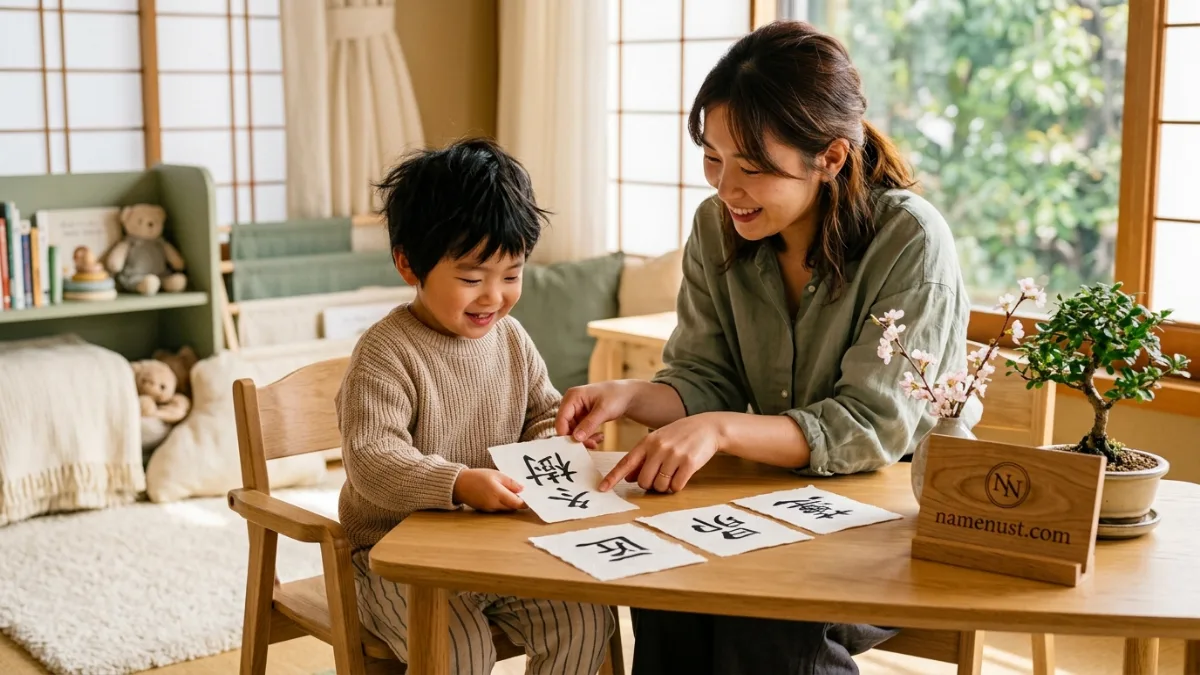
Rare Japanese boy names offer a meaningful way to explore Japanese language, culture, and tradition while finding a distinctive name for your baby.
From nature inspired choices like Fuyuki (冬樹), meaning “winter tree,” to Takumi (匠), meaning “artisan,” these names carry different associations through their Japanese characters.
Some names reflect the beauty of nature, while others express qualities such as courage, wisdom, sincerity, and respect. However, a Japanese name’s meaning often depends on the specific kanji used, as the same pronunciation can have several written forms.
In this guide, you’ll discover distinctive Japanese boy names, their meanings, and cultural context to help you create a thoughtful shortlist and choose a name that suits your preferences.
25 Rare Japanese Boy Names to Consider
The following names include Japanese kanji, common readings, and meanings associated with the specific characters shown. They are selected for distinctive sound, imagery, or traditional associations—not because every name has been proven statistically rare.
| Name | Japanese | Meaning or association |
| Fuyuki | 冬樹 | Winter tree |
| Takumi | 匠 | Artisan or craftsperson |
| Subaru | 昴 | The Pleiades star cluster |
| Isamu | 勇 | Courage or bravery |
| Makoto | 誠 | Sincerity or honesty |
| Minoru | 実 | Fruit, seed, or reality, depending on context |
| Arata | 新 | New or fresh |
| Itsuki | 樹 | Tree |
| Hayate | 疾風 | A swift gust or gale |
| Riku | 陸 | Land |
| Akito | 明人 | Bright or clear (明) + person (人) |
| Haruki | 春樹 | Spring tree |
| Natsuki | 夏樹 | Summer tree |
| Kaito | 海斗 | Sea (海) + 斗, a character historically associated with a measuring vessel and used in names |
| Shion | 紫苑 | Aster flower; also the name of a plant |
| Ren | 蓮 | Lotus |
| Saku | 朔 | New moon or the first day of a lunar month |
| Nagi | 凪 | Calm weather or a lull in the wind and waves |
| Iori | 伊織 | A traditional personal name; the full name’s meaning should not be reduced to a single fixed translation |
| Ao | 碧 | Blue green or jade like blue, depending on usage |
| Kei | 慧 | Wisdom or insight |
| Jin | 仁 | Benevolence or humanity |
| Rei | 礼 | Courtesy or respect |
| Hikaru | 光 | Light or radiance |
| Kaoru | 薫 | Fragrance or a pleasant aroma |
Important: These are examples of possible name and kanji combinations, not a verified ranking of Japan’s rarest boy names. Japanese kanji can have multiple readings, and the same pronunciation may be written with different characters. Confirm the intended reading and suitability with a knowledgeable Japanese speaker before making a final choice.
Rare Japanese Boy Names Inspired by Nature
Nature inspired names can suggest trees, flowers, landscapes, weather, or the night sky. Their associations may be especially appealing to parents who want a name with a visual meaning.
Fuyuki (冬樹)
Fuyuki combines 冬, meaning “winter,” with 樹, meaning “tree.” The characters create the image of a tree in winter. It can appeal to parents who appreciate seasonal imagery and a calm, understated sound.
Haruki (春樹)
Haruki combines 春, meaning “spring,” with 樹, meaning “tree.” The characters evoke a tree in spring and its association with seasonal renewal. The meaning belongs to this particular kanji combination; other spellings of Haruki may carry different associations.
Natsuki (夏樹)
Natsuki combines 夏, meaning “summer,” with 樹, meaning “tree.” It offers a warm seasonal image and a straightforward combination of recognizable characters.
Subaru (昴)
Subaru is associated with the Pleiades, a star cluster visible in the night sky. Its celestial association makes it an appealing option for families drawn to astronomy or star imagery.
Shion (紫苑)
The characters 紫苑 refer to an aster plant. This option combines a botanical association with a distinctive sound. As with other Japanese names, its pronunciation and gender usage should be checked for the particular context in which it will be used.
Ren (蓮)
Ren, written 蓮, means “lotus.” The flower has important cultural associations in Japan, including Buddhist imagery. Ren is not necessarily rare within Japan: it appeared among the leading boys’ name spellings in Meiji Yasuda Life Insurance’s 2025 survey.
Japanese Boy Names With Strong or Meaningful Associations
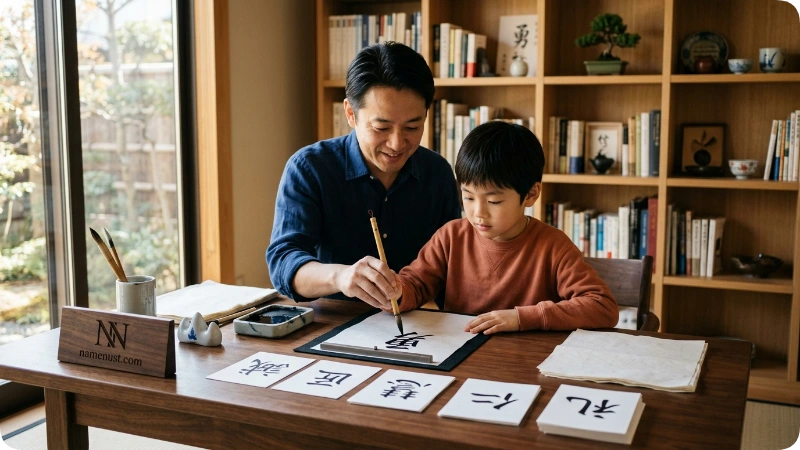
If you prefer a name associated with character, wisdom, or honesty, these options offer clear meanings through their chosen kanji.
Isamu (勇)
The character 勇 means “courage” or “bravery.” Isamu is a traditional Japanese masculine name, and this spelling expresses a direct association with courage.
Makoto (誠)
The character 誠 means “sincerity” or “honesty.” Makoto is used as a personal name in Japan, and its meaning may appeal to families who value truthfulness and integrity.
Takumi (匠)
The character 匠 means “artisan” or “craftsperson.” Takumi is associated with skill, craftsmanship, and the ability to create something well.
Kei (慧)
The character 慧 means “wisdom” or “insight.” Kei is a short name with a meaning connected to thoughtful judgment and understanding.
Jin (仁)
The character 仁 is associated with benevolence and humanity. It has a long history in East Asian ethical thought, including Confucian traditions. This is a cultural and philosophical association rather than a claim that the name belongs exclusively to one tradition.
Rei (礼)
The character 礼 means “courtesy,” “etiquette,” or “respect.” Rei is concise and has a clear meaning when written with this character. Other kanji spellings of Rei can mean something different.
Short and Distinctive Japanese Boy Names
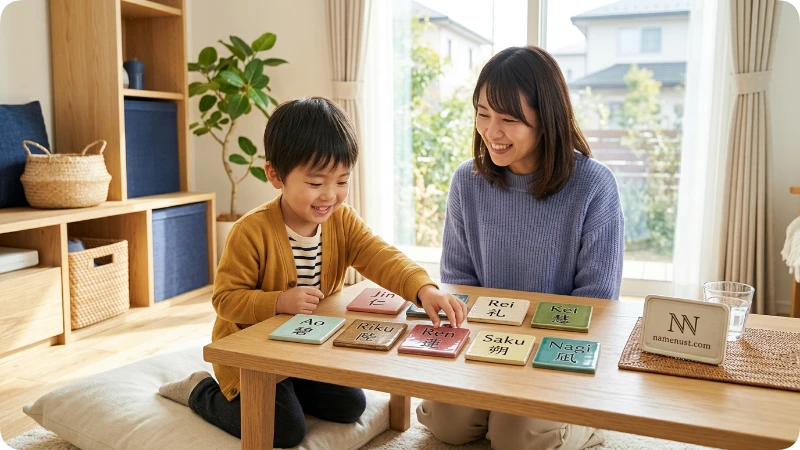
Short names may be easier for some international families to pronounce and remember. Still, a short romanized spelling does not guarantee that a name will be read correctly in Japanese.
- Ao (碧): A blue green or jade like blue association.
- Riku (陸): Land.
- Jin (仁): Benevolence or humanity.
- Rei (礼): Courtesy or respect.
- Kei (慧): Wisdom or insight.
- Ren (蓮): Lotus.
- Saku (朔): New moon or the first day of a lunar month.
- Nagi (凪): A lull in the wind or waves.
Some of these short names are already well established in contemporary Japanese naming. For example, the 2025 Meiji Yasuda survey included 蓮 (Ren), 朔 (Saku), and 碧 (Ao) among its leading boys’ name spellings. Therefore, “short” and “distinctive” should not automatically be treated as synonyms for “rare.”
Traditional Japanese Boy Names With Distinctive Character
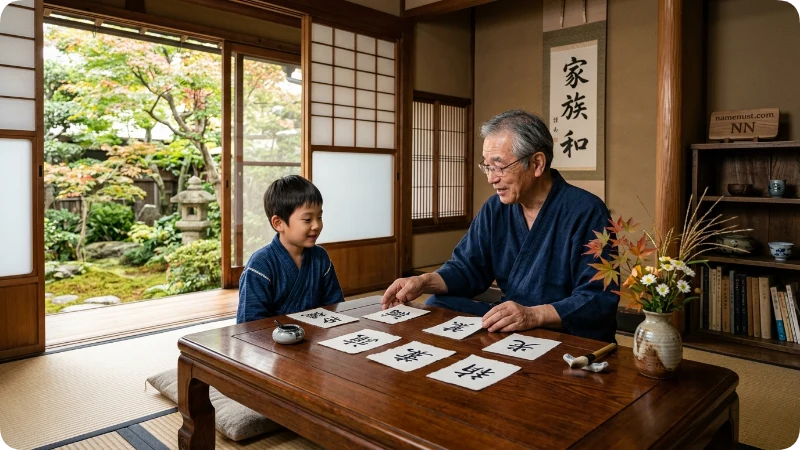
A name can feel distinctive because of its history, sound, or written form, even when it is not statistically uncommon.
Iori (伊織)
Iori is a traditional Japanese personal name. Its character combination is important: individual kanji can have several meanings and name specific functions, so it is misleading to assign one simple English definition to every spelling of Iori.
Makoto (誠)
Makoto is associated with sincerity and honesty when written 誠. It is a useful example of a name whose meaning is clear from the chosen character, although its familiarity will vary by generation and community.
Kaoru (薫)
Kaoru, written 薫, is associated with fragrance or aroma. It is used as a Japanese given name and can be used for different genders, depending on the individual and context. It should not be classified as exclusively masculine based on its sound alone.
Hikaru (光)
Hikaru, written 光, means “light” or “radiance.” It is also used across genders in Japan, so parents seeking an exclusively masculine name should consider that distinction.
Arata (新)
Arata, written 新, means “new” or “fresh.” Its meaning gives it an association with beginnings, but it should not be described as rare without relevant population data.
How to Choose a Rare Japanese Boy Name
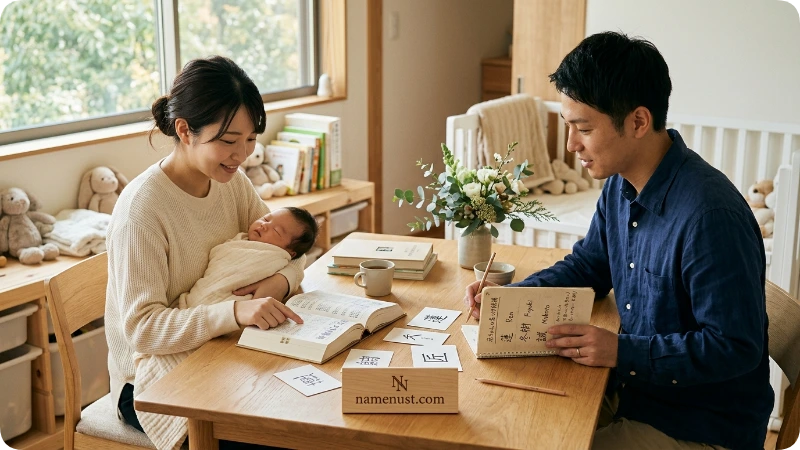
Choosing a name involves more than finding an attractive sound or an appealing English translation. The written characters, pronunciation, cultural context, and intended use all matter.
1. Choose the kanji before relying on the meaning
Japanese names may use several different kanji combinations for the same reading. For example, a name pronounced Ren can be written 蓮, which means “lotus,” but another spelling may have a different meaning. Always assess the exact characters you intend to use.
2. Check the pronunciation
Romanization helps readers who do not know Japanese, but it cannot communicate every detail of the original pronunciation. Listen to native speaker examples when possible, and ask a Japanese speaker to confirm how the name is likely to be read.
3. Decide what “rare” means for your family
A name may be unusual in an English speaking country while being familiar in Japan. If statistical rarity matters, consult birth name records for a specific year and region instead of relying on baby name blogs or subjective lists.
4. Consider gender and cultural usage
Some Japanese given names are strongly associated with boys, some with girls, and others are used across genders. Usage can change by generation and context. Check the specific name rather than assuming that every name in a list is exclusively masculine.
5. Check legal registration requirements
If the child will be registered in Japan, check the current official rules for names and kanji with the relevant Japanese municipal authority. If the child will be registered elsewhere, consider that country’s naming and birth registration requirements as well.
Frequently Asked Questions
What is a rare Japanese boy name?
A rare Japanese boy name is one used infrequently in a clearly defined population and time period. A name can seem unusual internationally without being rare in Japan. Statistical claims require appropriate birth name data.
What are some distinctive Japanese boy names with meanings?
Examples include Fuyuki (冬樹), “winter tree”; Takumi (匠), “artisan”; Subaru (昴), associated with the Pleiades; Isamu (勇), “courage”; and Makoto (誠), “sincerity.” Meanings depend on the chosen kanji.
Do Japanese names have different meanings depending on kanji?
Yes. The same pronunciation can be written using different kanji, and each combination can have a different meaning or association. The characters should always be checked alongside the intended reading.
Are short Japanese boy names rare?
Not necessarily. Names such as Ren, Ao, and Saku are short, but several appeared among the leading boys’ name spellings in Meiji Yasuda’s 2025 survey. Shortness does not establish rarity.
Can a Japanese boy’s name be unisex?
Yes. Some Japanese given names are used across genders. Kaoru and Hikaru, for example, can be used for different genders. The exact writing and individual context may affect how a name is perceived.
Conclusion
Choosing from rare Japanese boy names is about more than finding an unusual sound. The right name can connect your child to meaningful ideas, such as nature, courage, wisdom, or craftsmanship.
Names like Fuyuki (冬樹), Subaru (昴), Isamu (勇), and Makoto (誠) offer different meanings and cultural associations to explore. Before making your final choice, check the exact kanji, pronunciation, gender usage, and cultural context with a reliable Japanese language source or knowledgeable speaker.
Remember that a name that sounds rare outside Japan may be familiar within the country. By understanding each name’s writing and meaning, you can choose a Japanese boy name that feels distinctive, appropriate, and personally meaningful.

Noah Mitchell is a passionate Name Researcher and Content Writer at Namenust.com. He specializes in creating well-researched content about name meanings, origins, history, cultural significance, and modern naming trends. His goal is to help readers discover unique, meaningful, and inspiring names for babies, businesses, characters, and more. Through informative and engaging articles, Noah makes name research simple, accurate, and enjoyable for readers around the world.